
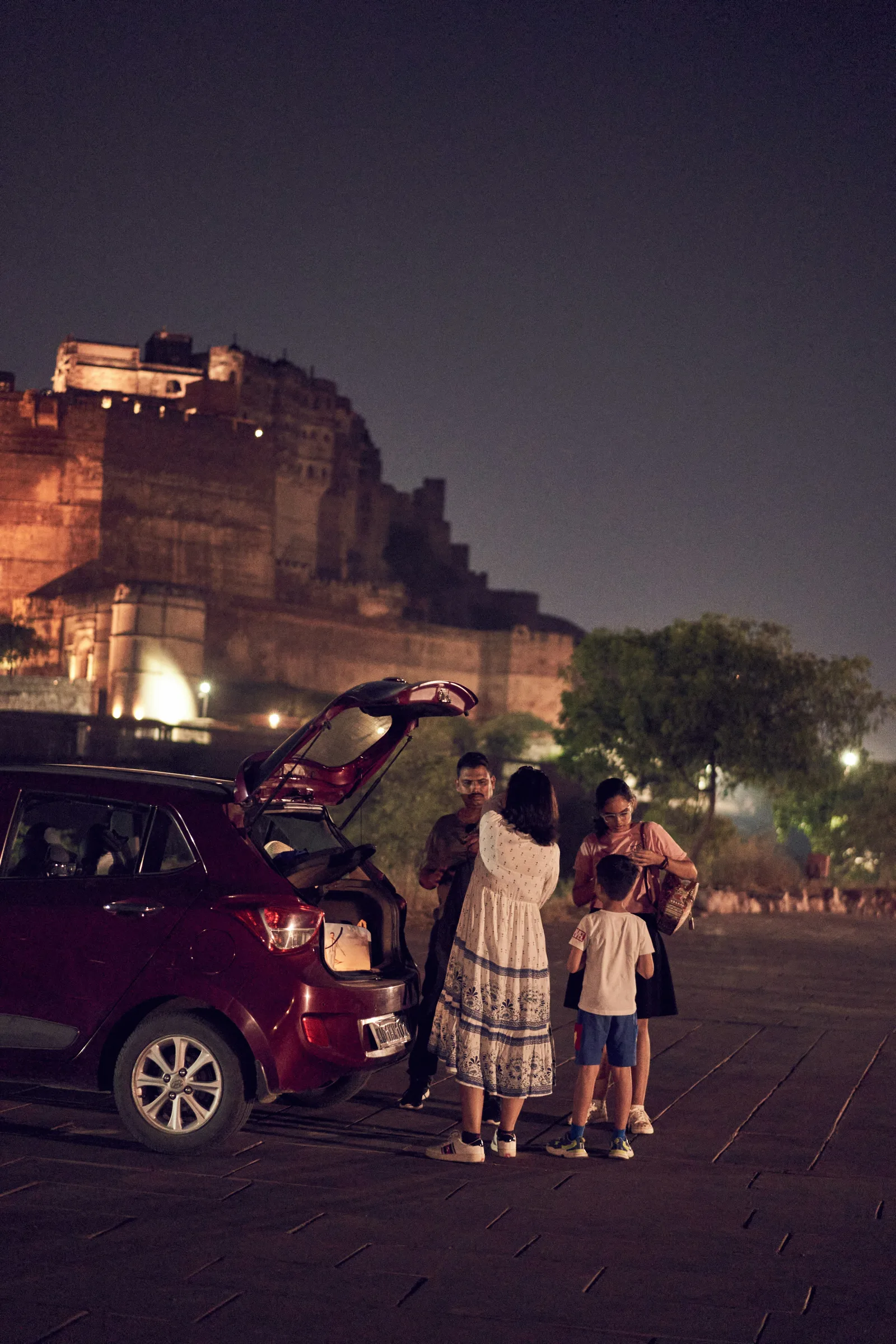
How can parents set a realistic family day?
Build a Jaipur visit around a child’s energy rather than an adult’s monument checklist. Two major stops and a relaxed meal often feel better than five hurried photo pauses. Start after breakfast, carry a change of clothes and include a quiet break before late afternoon. Tell the driver the ages of the children, number of adults and any mobility needs so the car can be matched to the group. A short ride between attractions may still involve walking, stairs or waiting outdoors. Make one adult responsible for head counts at each vehicle transfer. Agree on a simple meeting plan if anyone becomes separated in a market. The full-day Jaipur route gives a framework, but families should treat it as adjustable and remove a stop if a child is tired.
What can children notice at Albert Hall Museum?
Albert Hall can work well for a family because the galleries provide an indoor change from Jaipur’s sun and traffic. Children may enjoy noticing animal forms, decorative objects and the large building’s arches, but the best gallery choice depends on their age and interests. Do not expect a young child to study every display; choose a few rooms, take a water break and ask staff about current exhibits. Ticket prices and hours are approximate until checked at the entrance, and some galleries may close for maintenance. The surrounding Ram Niwas Garden offers a place to pause, subject to park access rules. A stroller can help on a smooth path but may not suit every entrance or interior threshold. Keep a lightweight carrier as an alternative for crowded areas.
Why does Jantar Mantar invite hands-on questions?
The observatory’s giant instruments make mathematics and astronomy visible at a child’s scale. Instead of trying to explain every structure, pick one instrument and ask what shadow, line or angle the child can see. The site is outdoors, has little shade in some areas and includes uneven walking surfaces. A hat, water and an early visit help during hot weather. Keep children behind barriers and do not climb on the masonry. A short guided explanation can hold attention better than a long lecture. If the sun is strong, combine the observatory with an indoor break rather than adding another exposed monument. Current entry details should be confirmed at the counter. The Jantar Mantar guide outlines the separate visit and ticket arrangements.
Where can a family spend creative time at Jawahar Kala Kendra?
Jawahar Kala Kendra is a cultural centre where families may find exhibitions, performances, workshops or public spaces depending on the calendar. It is not a guaranteed children’s attraction every day, so check the program before making a special trip. The architecture itself can spark a conversation about courtyards and colour, but access to galleries or rehearsal areas may be limited by events. Ask before photographing artists or visitors. A quieter visit can be a useful pause after a busy fort morning. Confirm the address and event entrance because a performance may use a different gate from the general complex. Families can pair a confirmed activity with an early dinner nearby, then return to the hotel before children become overtired.
When is Chokhi Dhani appealing to young travellers?
Chokhi Dhani offers an evening setting with folk performance, craft demonstrations, food and village-inspired activities. It can entertain children who enjoy movement and music, but it involves walking, noise and a later return to the hotel. Check the venue’s current program and meal package before booking; a dance or activity is not necessarily available at every time. Bring a light layer for cooler evenings and keep the family’s meeting point clear. If a child has sensory sensitivities or dietary restrictions, contact the venue ahead of arrival. The attraction is outside the central sightseeing area, so agree whether the driver waits or comes back after the scheduled finish. The evening transfer option can coordinate the ride with the venue opening.
How do stroller and elder needs change the car choice?
A sedan may work for a couple with one young child and a compact foldable stroller, but luggage can consume the boot quickly. An Ertiga or Kia Carens offers a third row for a larger family; when every seat is occupied, space for suitcases becomes smaller. An Innova Crysta or Hycross can feel roomier on a long day, while a Tempo Traveller may keep an extended family together. These category names do not guarantee a specific registration or layout, so confirm the assigned model, child restraint and luggage fit. Older relatives may need a car with easier entry, a close legal drop and fewer steps between attractions. Tell the operator whether a wheelchair folds and its approximate dimensions. The SUV category and Traveller page describe options to compare.
What keeps children safe around Jaipur traffic?
Use the pavement and marked crossings, especially near Hawa Mahal and the walled-city markets where traffic mixes with pedestrians. Ask the driver to stop only at a legal pickup point; a door opened into a moving lane is dangerous. Each child should have a seat belt, and ask about an age-appropriate harness, since restraints are not standard equipment. Keep car doors locked in slow traffic and avoid leaving a child alone while an adult shops. Save the driver’s number and teach older children the hotel name or a caregiver’s phone number. At forts, keep little hands away from edges, steps and fragile walls. Agree on a regrouping landmark before entering a crowded attraction.
How should snacks, rest and heat be managed?
Pack small snacks that do not melt, wet wipes, refillable bottles and any needed medicine. Offer water before a child asks, particularly during an outdoor observatory or fort visit. Avoid leaving food where monkeys can reach it at temple or valley sites. A planned lunch with clean washrooms can prevent a difficult late-day search. Keep one spare shirt for a toddler and a bag for wet clothes during monsoon. In the hottest months, shorten exposed stops and return to the hotel for a rest. On rainy days, use a museum or an indoor activity and ask the driver about safe roads. Family comfort depends on breaks as much as the number of sites.
Who should plan a quiet alternative to the main circuit?
Infants, neurodivergent children, older relatives and travellers recovering from illness may benefit from a lower-stimulation route. Instead of a crowded market, choose a garden or one scheduled cultural activity. Instead of combining several uphill sites, select a single fort and a comfortable lunch. Ask attractions about lift access, seating and restroom availability, but verify details close to the visit because historic structures may not offer modern access. A private car helps the group leave early if needed, though waiting and extra-hour terms still apply. Keep the day’s essential appointment first and make other stops optional. A family holiday succeeds when each traveller has a manageable role, not when every landmark appears on a checklist. A small pouch for wipes, plasters and spare socks stays easier to reach than a bag buried beneath suitcases.